
Well, here it is – the closing chapter of Young Punctum. There is no more because I stopped writing it after 6 May 1978. In the following week, the industry chart was expanded from a Top 50 to a Top 75, and the chart you heard on the radio or saw on Top Of The Pops or in the racks behind the counter at Woolworth’s was also lengthened from a Top 30 to a Top 40, which latter model remains to this day (although the main chart has long since been extended to a Top 100).
What all this meant to me at the time was a lot of new entries and serious headaches. On the other hand, I was moving on with my life. I was getting interested in other things, including making music of my own, and the weekly chart review exercise seemed like one of those “childish things” Tony Blair subsequently told us to put away – that remark was actually from 1 Corinthians 13:11 but I was never much for Religious Education. As a school pupil in West Central Scotland I was obliged to receive one period of R.E. per week. In my third year (i.e. 1977-8) my class got the Head of Business Studies to take that period. She was a no-nonsense Jean Brodie type (with hats, but thankfully minus the fascism) who had no patience for religious dogma and insisted we learn something useful instead, i.e. how to type.
Most of my alleged peers scoffed and sneered, as young boys with uncertain hormones tend to do. However, I already had nearly nine years of typing experience and as a trained pianist it didn’t hurt that the fingering was almost identical. I made so firm an impression that Mrs L took me aside and asked me if I was interested in undertaking any formal training, specifically in Pitman’s shorthand and AMSPAR medical secretarial typing. She trained me up to a point, then I did some formal training (at evening class level), took both sets of exams and passed them with colours that were flying. So I became, in part accidentally, a trained medical secretary…and what do you know, funny how things turn out etc., but it’s that trade that has put butter on my bread, a roof over my head and books and music in the house for forty-one years this coming June! That isn’t the only thing I’ve done in the NHS but it’s what I was suited to do. I did try varying degrees of management but in all cases it became clear that I thrived much more successfully as a backroom reliable than I did leading from the front.
Too bad, of course, for those, including my parents, who had imagined a dazzling and what would now be called monetised future as a writer. Or anything else for that matter. Did I tell you that my parents covertly sent one of my reviews – Kraftwerk’s Radio-Activity, if memory correctly serves – to the editor of the NME when they were advertising for hip young gunslingers to write for them, and that said editor subsequently rang up my dad’s ‘phone at work (because at the time we didn’t have one in the house) wanting to know more? My father told him how old I was, and he gasped, chuckled and quite rightly said that I was far too young for the Rock ‘N’ Roll Lifestyle but that I should get in touch with the NME again when I turned eighteen. As it happens, I did (riding that escalator over the hill), but different people were running the paper at that time; let us just say it had an effect, but it certainly didn’t lead to anything.
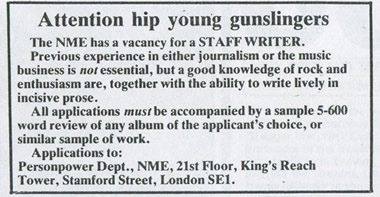
I did some fanzine writing in the early-mid eighties and yet more writing for various university-affiliated journals, including an early eighties sort-of equivalent of Young Punctum which you really don’t need or want to read (trust me, you don’t, unless you have a penchant for terrible Paul Morley imitations), but career-wise things were definitely heading in a completely different direction, and when the crunch decide-what-you’re-going-to-do-with-the-rest-of-your-life moment came I discovered mine wasn’t the only mouth needing to be fed, and who remembered me from the seventies anyway? Hence the NHS (it was that or the Civil Service; I scored a remarkably high mark on my written exam for the latter, but the subsequent interview was anticlimactic).
From a perspective of the spring of 1978, I wasn’t sure there was much else I could do. There were no House Shows or Drama Week that year because the school’s teachers had decided to work to rule as part of a pay dispute, i.e. no extracurricular activity whatsoever. Not even a Debating Society (which I and three of my fellow pupils took on and continued ourselves)! I was not approached by the Scottish Youth Theatre to continue and propagate my interest in acting – mainly because nobody cared enough about it to put my name forward to them. There was, as the histories will confirm, a lot of this about at the time. Right at the point where I was best placed to flourish, my ambitions got nipped in the bud and were denied to me. Brought down in mid-flight. How dare I not be like everybody else. The downside of a particularly Scottish brand of socialism. Know your place, your station. Don’t get above yourself; you’ll show everybody else up. As though I were “everybody else.”

* * * * * *
But no.
I wasn’t like everybody else. And I profoundly resented being treated like everybody else. I was by some considerable degree the best English student in my year and possibly in any year. I was the only pupil ever – before the qualification was cheapened and demoted to an “I Went To School” certificate - to get a perfect 100% in my Higher Grade English. Of the six hundred or so pupils who attended Uddingston Grammar School during my time there, I was one of only two pupils who managed to win a place at Oxbridge. Admittedly the latter didn’t happen before a trial period/false start at St Andrews – really, don’t ask (I was too young and stupid, and that’s all anyone needs to know) – but nevertheless it happened, I gave Oxford a second go and on the second go I got in.
So how did the school treat me after my second year triumph in English? Stick me in a mixed ability class which slowed everybody down, raised mediocrities to the middling top and put visionaries in their place, because you’re not supposed to show everybody else up; that isn’t socialism. Well, I agree with that; no, it definitely isn’t. Then nip my performing ambitions in the bud and stop all extracurricular stuff because you’re greedy for a bit more money. Because Everybody’s Supposed To Be The Same. Nobody’s better than anybody else, stick to your station.
But I didn’t want to stick to my station. I was better than anybody else at what I was good at. Any educational establishment of worth would have acknowledged and absorbed that and nurtured me accordingly. Why? Because being good at English, and indeed at typing, and knowing a lot about music, constituted my passport of escape. My chance to shine, to get the hell out of Uddingston, preferably as far away from it and all that it stood for as possible, to flee from my presumed destiny. It was my opportunity to BE SOMEBODY as opposed to ANYBODY or, worse, EVERYBODY ELSE.
Their response? No. You can’t have any of that. IT’S NOT FAIR TO EVERYBODY ELSE, to people who aren’t as good as you. You should rather strive to be as mediocre as them; trust us, it’ll make life a lot easier for you. The Alan Latchley school of management. No human being has the right to be better at anything than any other human being.
I wanted away from all of that, since it’s wasting your life living in a box for fear of upsetting all the other box-dwellers. And yes, I know; if my parents had been richer I would have had private tutors and to hell with the council. The other, almost exclusively middle-class, comparatively well-off pupils were never going to have worries of that sort. They happily accepted their lot and put up with it, contributed to the solvent pot. I had to try harder than any of them, and since my parents were never going to be polite parishioners who dutifully went to church of a Sunday morning (we never went to church), the dice were already loaded.
You know what real socialism is? It’s what capitalism pretends to be, a system in which everybody is given a fair chance to make something of themselves that is better than, or at the very least different from, what they were before. Somebody who betters themselves without stepping on, humiliating or eradicating others. Someone who becomes more than they were so that they can genuinely help others. It ISN’T about placing everybody in equivalent boxes, patting them on the head and going “there, there” to ensure that everybody stays the same.
Hence I never had a flourishing career as a teenage writer or actor. Any decent society would have encouraged and helped that to happen. I won a prize in Bellshill for an essay – I can’t remember what it was about at this distance – but nobody ever followed that up, least of all me. I needed guidance to do that and all I was fed were facts and numbers that nobody was going to use in real life. Or I went home and was shouted at and worse. No wonder I wanted to get away from all of it. All this be like everybody else bollocks. All that nobody’s better than anybody else faux-socialist garbage. It’s the taking part that matters no it fucking isn’t. History never remembers those who just took part. It’s putting you in your place, slotting you into a black hole that says JOB because that is what school is finally all about, a means of conditioning children into becoming workers, servants of capitalism, by inculcating punctuality and unquestioning obedience of authority.
What was this about again?

* * * * * *
In the spring of 1978 I wanted to do other things and nobody would allow me the time and space in which to do them. I didn’t want to write about the charts any more. I didn’t abandon my interest in music – quite the reverse! But I didn’t feel the need to put typescript to paper in relation to the imminent Travolta/Boney M/Bee Gees/Grease/Smurfs explosion. Really, “The Smurf Song” getting to number two for six weeks was the straw that broke my nascent chart-chronicling camel’s back. Did I want to waste any money on that tripe when there was so much else musically to explore? I instantly decided that completism was for completists only and felt it preferable to enjoy rather than endure life. Also it was top of the viewers’ chart on The Saturday Banana for eight sodding weeks (Southern Television, Bill Oddie; I’m only scratching the surface. They did have Gruppo Sportivo on one week, though…).
But I have developed a theory about some of the music and musicians that regularly found themselves in the “Fun Thirty” in the four-and-a-third years that this story has covered…
My Wholly Unoriginal Theory
Revisiting and to an extent reframing the writing about music that I did as a 10-14-year-old – and speaking, as I currently do, as a sixty-two-year-old; Nicholas Royle’s telescope theory holds up (read his superb short story collection Paris Fantastique) – it’s sobering to look at the names which keep popping up in these charts regularly, even though no great love or respect – and you could easily subtract the adjective “great” – is afforded to them. Popular, but never truly popular. Or so it has been decided.
What fragment of romance or sensuality clings to Showaddywaddy or Smokie or the Wurzels or the seemingly reborn Barron Knights or what would today be termed the rebooted Brotherhood of Man? Why always the five-minutes-fresh novelties, the televisual spinoffs, the talent show winners, the acres of boring ballads that seemingly got nobody excited even then but were still purchased in sufficient numbers to become hits?
The key word there is “seemingly.” That is what we would like, indeed have been trained, to believe. All those ludicrously unhip singers and groups – or comedians or actors pretending to be singers – safely fenced off behind our steely cordon of cool? Or is it just easier, more convenient, for us not to be able, or rendering ourselves unable, to see them?
In my commentary of the time I made reference to “wallys” in respect of (or showing complete disrespect to) the musical tastes what Jarvis Cocker’s protagonist called “common people.” This demonstrates how much more influenced my music writing was at the time by James Hamilton than by, say, Burchill or Parsons, or even Steve Lake or Richard Williams (which latter two were far nearer to my own tastes) and obviously I couldn’t and wouldn’t use a term like that today.
The huge problem with which we have to deal is that these artists, and their records, represent the general tastes of the British working classes. They are not refined, in many ways could be viewed as base, and already I am approaching Richard Hoggart levels of condescension. Theirs were the singles, and in many cases albums, that “we” chose to hide at the back of our piles for fear of future embarrassment, because if we are honest with ourselves we found them danceable, funny and in some cases sexy.
The period covered by Young Punctum is basically a time when one big British mass musical movement – glam – was in its dying throes, subsequently to be succeeded by punk. That’s the common historical algorithm by which all coolness has to be measured, and if we prefer to render random transient fancies as linear logic then that pathway makes convenient sense.
But if we look at the singles which actually sold well enough to reach the top thirty over that period, the linearity becomes muddled and vague. The supposed interregnum between glam and punk saw the rise and fairly swift fall of the Bay City Rollers, but their work has been deemed irredeemably plebeian to be admitted to any “hall of fame” (even though “Saturday Night,” a flop in 1973 and only an album track when re-recorded in 1975 in Britain, but the latter year’s Christmas number one in the U.S.A. as a single, was a direct influence on the band we must remember simply to call “Ramones”). Awkwardly and persistently popular record labels like Bell (later absorbed into Arista) and RAK do not bear the badge of credibility borne by Stiff or even (at the time) Virgin, yet again and again do they recur in the lists.
Moreover – and this is EXTREMELY inconvenient for a lot of self-appointed critical “gatekeepers” – the 1974-8 period signifies a time when Black popular music was at one of its many peaks. The overwhelming majority of hits in those four-and-something years came, not from rock (whether glam, hard, metal or punk or good old basic rock ‘n’ roll) or white mainstream pop, but from soul and, eventually, disco. This was what the working class wanted. Where their elder student cousins dressed down, didn’t bother with haircuts and rolled their joints on Zeppelin and Floyd gatefold sleeves, the “plebs” dressed smartly, went out to Wigan Casino or the Twisted Wheel or Blackpool Mecca and regularly had the time of their lives. Meanwhile, the aforementioned Zeppelin and Floyd – or, more accurately, their management – spent most of the seventies believing that singles in Britain were beneath them (although “the Floyd” eventually saw sense and ended up with the last number one single of the decade).
In addition, working class music fans didn’t discriminate. No wars of hipness were waged on the factory floor. Showaddywaddy were as good as Alice Cooper were as good as Gladys Knight and the Pips were as good as Status Quo were as good as even (whisper it) G*ry Gl*tt*r. “Fanfare For The Common Man” and “Combine Harvester” were both considered lively stompers and “No Charge” was as heartrending to many as “If You Leave Me Now.” To them, Bradford working-class lads Smokie and Leicester working-class lads Showaddywaddy – not forgetting Toxteth working-class lads The Real Thing – were all equal.
Being culturally fussy is a luxury. On the few and intermittent occasions when I have worked as a DJ, it has been largely for general audiences who don’t want a history lecture or intimidatory oneupmanship, but simply to have a good time. Get them on your side with The Hits, and then as the night (and the drink) wears on and the spirits are maintained, and if you’re clever enough, you can sneak in some curveballs that end up making total sense.
And I wonder if many of us haven’t simply been wasting our lives nitpicking and determining what is and isn’t acceptable in culture, instead of enriching our lives by enjoying it all. Of course we all have individual music tastes and prejudices, since we are human beings and not robots. But we need to be honest with ourselves about what, at gut-ahead-of-brain level, we actually like, rather than what it’s right for other people to think that we like.
As you can see from my writing, I didn’t like a lot of the 1974-78 hits at the time for the very basic reason that they just didn’t appeal to me. Since then I have softened my views on some, though by no means all, of those. Yet the point here is that I bought all of them, paid for them with my pocket money, at the time. I gave all of these singles equal treatment. We probably should still do, regardless of whether or not we like (or think we like) them.
* * * * * *
There is of course a more pressing reason for reviving this writing, namely that I am getting old and the time is rapidly approaching when I need to sort my affairs out, leave some kind of mark indicating what kind of person I was. To inform those who come after me that once I existed.
General Note on Extras
As has been abundantly clear from even a cursory reading of this blog, I have taken the liberty of adding in extra music to augment, amplify or occasionally contradict the hits. All of the music comes from more or less the same time, and where possible the same month. I have also done a bit of time-hopping and put in music from other eras, including the present one, to underline a point or two, and trust that my readers are smart enough to spot the links and my reasons for placing them. If you’re baffled, however, just keep on looking – it’s meant to be an adventure!
Once I am done with the timeline of the actual writing I am going to return to the very beginning, to January 1974, and add the same extras to the early entries. The idea to augment the hits only sprang to my mind halfway through planning 1975, and the posts before then will undoubtedly benefit from being revamped and hopefully bettered. So I’m not quite done with this blog yet.
As far as this final entry is concerned, and to ensure an agreeably big finish, I am going to post as many “bonuses” as can be sustained, and they will not by any means all be from April or early May of 1978, but do fit into the story that I am attempting to tell (including singles which were available but not yet hits and/or still on import, or album tracks yet to be released as hit singles). I have also compiled two extensive Spotify playlists; one covers all the good music of 1977 that wasn’t punk (or at any rate all the good music that’s available on Spotify), while the other is a half-day jaunt through pretty much everything that was musically worthwhile (including punk) about 1978. My additions here will reflect music that had a significant impact on me at the time, from whichever direction.
Otherwise, that is it. Thanks for reading these old jottings; I won’t miss the strain of having to type them all out again!
Oh, and do bear in mind; all the reviews in this blog were written about half a century ago, when I was a different person. The opinions expressed by me then are not necessarily the ones I hold now.
Notes on Text
One member of Co-Co was Cheryl Baker, who went on three years later to become one-quarter of Bucks Fizz, who in turn turned out to be infinitely better than the Brotherhood Of Man.
"Rivers Of Babylon" at this point was not a double A-side, so I haven't included "Brown Girl In The Ring," which latter in any case is shit.
The Italian-language original of "Do It, Do It Again" is posted here because, as an Italian, I prefer it, and also this is my blog, my gaff.
1 April
DR HOOK: More Like The Movies/Makin’ Love And Music (Capitol CL 15967)
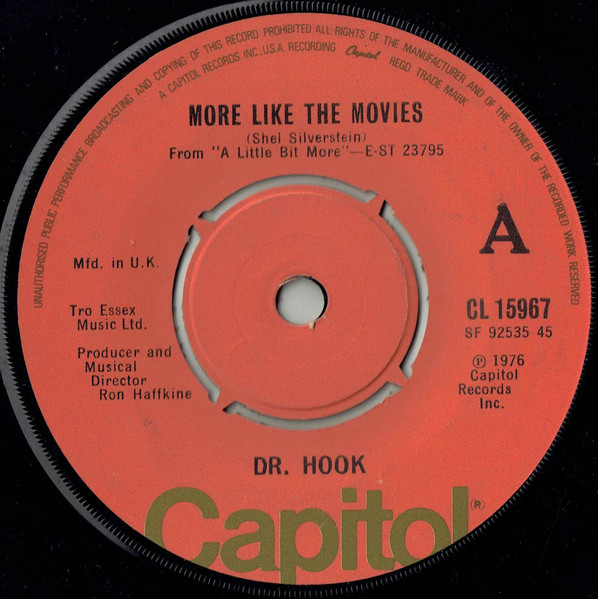
On one hand there’s the question of how Dr Hook, formally a very funny and entertaining satirical group, ended up making moping, moaning MoR-country ballads. Yet this one, which is particularly dreary even by their standards, was also written by Shel Silverstein. Has everybody gone soft?
TAVARES: The Ghost Of Love/Bein’ With You (Capitol CL 15968)

The second consecutive new entry on Capitol, and with a consecutive catalogue number to boot; so much of what makes a hit comes down to record company marketing. Sounds like they're going for the "I Remember Yesterday" audience but this is far too fast and fragile to hit really big. Lightweight by the group’s standards. Do you spot a trend here?
JOHNNY MATHIS/DENIECE WILLIAMS: Too Much, Too Little, Too Late/Emotions (CBS 6164)

More music for parents. Sludgy divorce ballad. This chart is sending me to sleep so far. Says everything to middle-aged people in Kylepark and nothing to my generation. Andrew likes it but he lives in Kylepark. The B-side is the same Bee Gees song that Samantha Sang sang. Lord forbid I ever “grow up.”
ANDREW GOLD: Never Let Her Slip Away/Looking For My Love (Asylum K 13112)
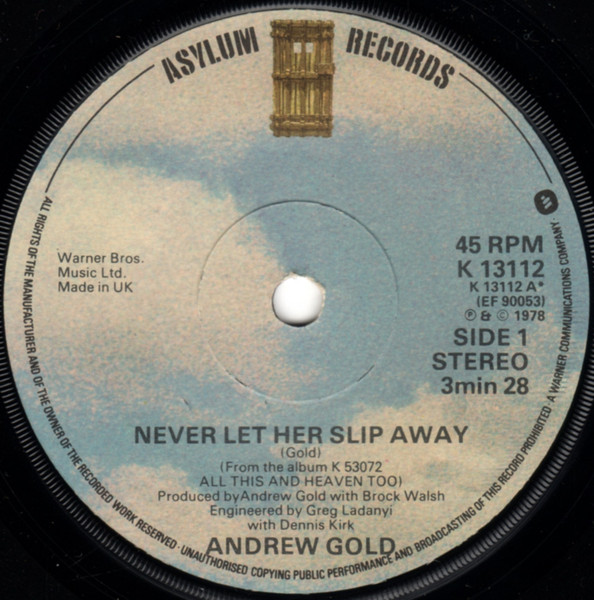
Pleasant, imaginative pop seemingly based on an electronic round-robin handclapping backing track with a good alto saxophone solo. Like Kraftwerk going doo-wop.
8 April
SHEILA B DEVOTION: Singin’ In The Rain Part 1/Singin’ In The Rain Part 2 (Carrere EMI 2751)

French disco Gene Kelly cover, simultaneously very daft and not daft enough.
WINGS: With A Little Luck/Backwards Traveller-Cuff Link (Parlophone R 6019)
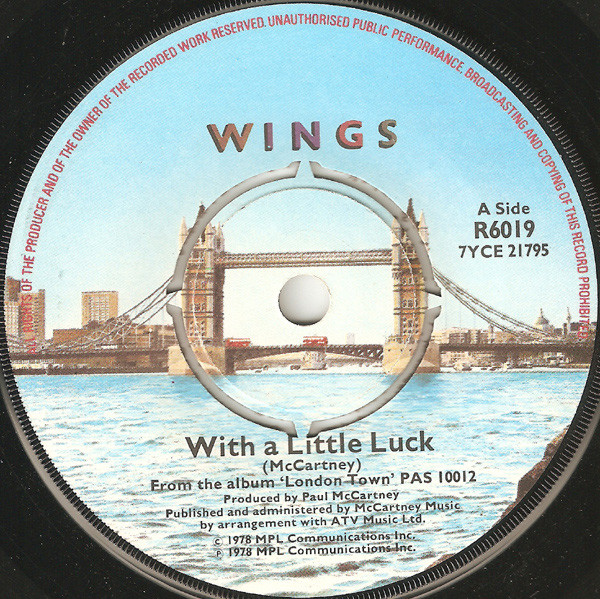
Very bland shopping centre Muzak which doesn’t excite me. About as much fun as playing golf on a Sunday. McCartney’s too comfortable; he needs to get out more. Andrew thinks it’s really good. This is why he’s going to do well in life.
15 April
MICHAEL ZAGER BAND: Let’s All Chant/Love Express (Private Stock PVT 143)

Now this has woken me up! Enormously ecstatic Eurodisco; just what was needed after all those weepies, and there’s even a “Penny Lane” piccolo trumpet in the bridge! This is the kind of record Paul McCartney should be making these days.
RICHARD MYHILL: It Takes Two To Tango/I Wanna Know Why (Utopia/Mercury TANGO 1)
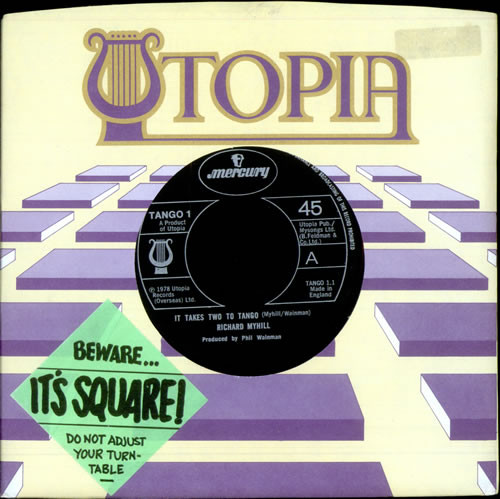
The gimmick here is that it’s a SQUARE single, and my goodness does this dated art-pop plodder sound square. You’d never have heard of it otherwise.
CHIC: Everybody Dance/You Can Get By (Atlantic K 11097)

This, on the other hand, is genuinely stylish, and superb. High-class three-dimensional disco-funk featuring some quite phenomenal bass playing. We need to keep an eye on Chic because they could prove to be very important.
THE BOOMTOWN RATS: She’s So Modern/Lying Again (Ensign ENY 13)

Pantomime punk and Geldof’s vocal mannerisms get progressively more irritating.
BEE GEES: Night Fever/Down The Road (RSO 2090 272)

The film Saturday Night Fever is obviously about to become huge, and John Travolta for all I know may well turn out to be the new Gene Kelly. The Bee Gees are obviously as unstoppable now as Abba were two years ago; this anxious but unfussy fast-ish (faster than “Stayin’ Alive” anyway) strutter should get them to number one for the first time in nearly ten years. Who would have thought that in 1968, listening to the local operatic society agony of “I’ve Gotta Get A Message To You, Olaf”?
22 April
RAYDIO: Jack And Jill/Get Down (Arista ARIST 161)

Laboured, interminable MoR-soul nursery rhyme analogy.
DEE D JACKSON: Automatic Lover/Didn’t Think You’d Do It (Mercury 6007 171)

Is this the next “I Feel Love”? Sensational cod-operatic electropop epic which sounds like Julie Covington (or possibly Julie Tippetts) singing Tommy, all underlined by a robotic Isaac Asimov Foundation tape loop: “I. AM. YOUR. AUT. O. MATIC. LOVER. AUT. O. MATIC. LOVER.” Vast yet sparse, dense yet utterly empty. Would have been huge in ’68 and is going to be unavoidably huge in ’78.
SQUEEZE: Take Me, I’m Yours/Night Nurse (A&M AMS 7335)

Charging out of Deptford, a terrific electropop gallop with fuzzed synth bass, good high/low vocal doubling, “I’m Not In Love” harmonies in the middle and tremendous drumming; pop music at its finest.
29 April
RUBY WINTERS: Come To Me!/Treat Me Right (Creole CR 153)

“Come To Me!” with an exclamation mark, as though she’s summoning her butler. Dull and worthy MoR-soul ballad. Andrew likes it.
DONNA SUMMER: Back In Love Again/Try Me, I Know, We Can Make It/Wasted (GTO GT 117)

Her Supremes pastiche from I Remember Yesterday, which surely everybody should long have had by now, inexplicably now on 12-inch despite minimal dancefloor potential. They can try “Try Me…” as many times as they like, but the public are unlikely to fall for it.
PATTI SMITH GROUP: Because The Night/God Speed (Arista ARIST 181)
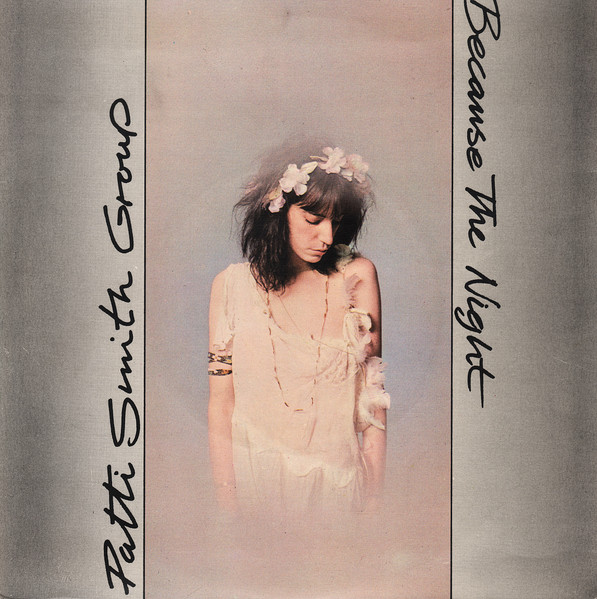
From a 1975 point of view, it’s strange yet logical that Patti Smith should finally make the charts with a song she co-wrote with Bruce Springsteen, and this is utterly fantastic pop, with booming drums, Patti vocally sounding remarkably like Carla Bley, and lyrics which almost count as literature. This is pop music at its most glorious.
RICHARD DENTON AND MARTIN COOK: Theme From ‘Hong Kong Beat’/Chasing The Dragon (BBC Records And Tapes RESL 52)
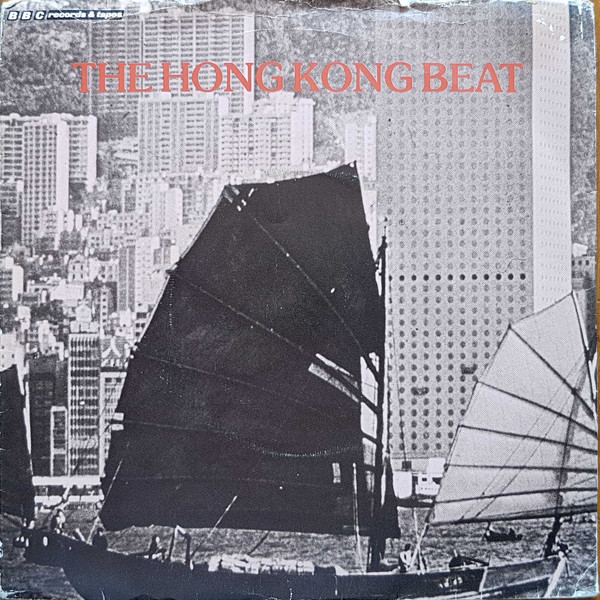
Slow, moody theme to a television documentary series about the Royal Hong Kong Police Force. Tasteful but pointless, like a decaffeinated Dark Side Of The Moon, complete with bored-sounding saxophone (and a slightly sinister string section). Andrew likes it.
RAFFAELLA CARRA: Do It, Do It Again/A Far L'Amore Comincia Tu (Epic EPC 6094)

We’re ahead of the game here because we already knew the original Italian version (which handily turns up on the B-side). Extremely silly but very catchy. Those daft enough not to make Adriano Celentano’s “Prisencolinensinainciusol” a big hit here four years ago (on which Signora Carra makes an appearance) are obviously not missing out this time.
BONEY M: Rivers Of Babylon/Brown Girl In The Ring (Atlantic/Hansa K 11120)

There is a very deep Christian faith embedded in the souls of many of my classroom colleagues (Andrew included). That is a roundabout way of saying all the other children in my class are Godheads. But they have already started to sing solemnly along to this on the radio at lunchtime because to them it is a hymn. It was originally a reggae song but there’s no way my classmates could be expected to know that – we don’t all read the NME (sometimes I think I’m the only one here who does).
Anyway, this cleansed rendition attains a Sunday School level of cleanliness and purity. I find it about as attractive as being forced to eat Ryvita for the rest of my life because apparently I was only put on this earth to suffer, but it’s going to be absolutely massive and be number one for a long time because the British people, whatever else you might want to say about them, love suffering. They can’t exist without it. The B-side is a jingly nursery rhyme which primary school pupils are likely still to have to suffer in the eighties.
CO-CO: Bad Old Days/Get You Out Of My Life (Ariola/Hansa AH 513)
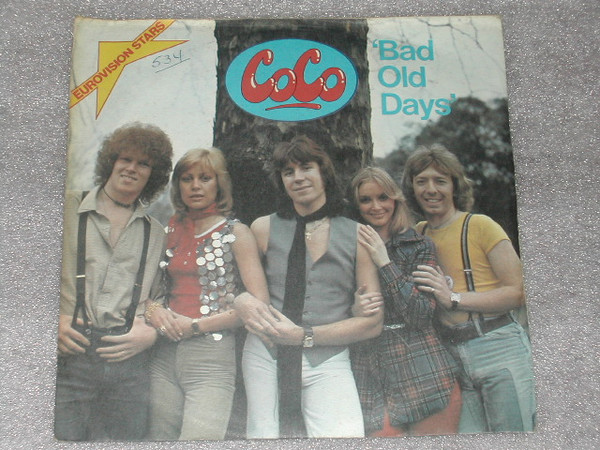
Eurovision time, and Britain is still stuck in the oompah-oompah quagmire. Unlikely to prove another Brotherhood Of Man, as low as that particular bar is set. Co-written by Stephanie de Sykes!
6 May
DARTS: The Boy From New York City/Bones (Magnet MAG 116)

Early sixties doo-wop song spruced up and modernised, with a strong lead vocal by Rita Ray; likely to be an even bigger hit than their last one, and going places Showaddywaddy are, literally, unable to go.
THE STRANGLERS: Nice ‘N’ Sleazy/Shut Up (United Artists UP 36379)

I heard this on Radio 1’s Round Table lying on my bed, evening sun streaming in through the windows and couldn’t believe it. This is so avant-garde that it hurts, complete with a Dave Greenfield complete freakout freeform synth solo which makes the Eno of Roxy Music sound like Russ Conway. It’s great that this is going to be a hit because it will annoy absolutely EVERYBODY and right now everybody absolutely NEEDS annoying. Bravo, as always, to Martin Rushent, who’s about the most creative and imaginative producer in British pop at the moment.
X-RAY SPEX: The Day The World Turned Day-Glo/Iama Poseur (EMI International INT 553)
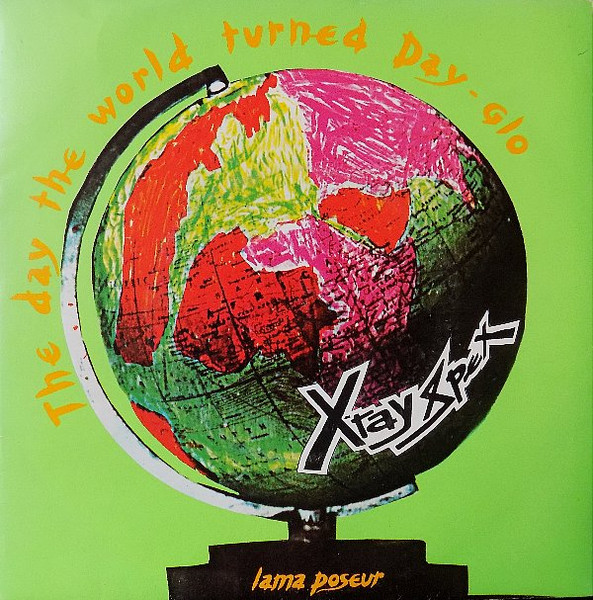
The charts seem to be waking up again – great also to see Poly Styrene & Co. getting a hit and going on Top Of The Pops. Speaking of Roxy Music, saxophonist Lora Logic certainly seems to have listened to Andy Mackay, and this song is rather like what happens the day after “Street Life.” Pop music at its boldest.
JOHN PAUL YOUNG: Love Is In The Air/Won’t Let This Feeling Go By (Ariola ARO 117)

I woke up this morning, and the way that the sun came welcoming its way into my bedroom gave me what I can only describe as promise – the promise of more happiness to come in my life, the promise of going out onto the Main Street and finding the world subtly altered for the better. Even the buzzing of the fly, because it’s too hot to leave the windows closed at the moment, didn’t disturb me. It wasn’t so much like looking out towards the world, but the world looking in towards me, as though from the opposite end of a telescope. I think of the International Herald Tribune newspaper, which my father buys at the end of every working day, think of the sunshine, of all the goodness and possibly greatness still to occur.
This record – and it is as much of a record as a song – sums up these feelings perfectly. “Love is in the air…in the rising of the sun.” You either get it or you don’t. I want a world that has room for X-Ray Spex AND John Paul Young because one that doesn’t isn’t worth inhabiting. Here’s to tomorrow.


Ah, the Saturday Banana. So, that's two people I knew that had been on TV on shows that I did watch but don't remember them being on... (one was a lad on the SB, the other was a girl that made up part of "Hills Angels"...)
ReplyDeleteA lovely way to end a blog that's been consistently fascinating over the last year, Marcello.
ReplyDeleteThank you for sharing it with us and the best of luck with whatever future projects you're planning.