
After all I’d experienced and felt that year, I was still back at school this month with my alleged peers making sneery, bad jokes about Elvis. How I reacted is recorded in my entry on “Way Down.” Third year, it was made pretty clear from the beginning, wasn’t going to be nearly as fun as second year had been. For a start, we’d been forced to compartmentalise and choose what subjects to study for “O” Grades (the Scottish equivalent of the old “O” Levels). Classmates began to grow up and talk seriously about careers. Driving lessons were often mentioned. I was forced out of the artistic group I fucking started. One of the two best English students in my year? My punishment was to be dumped in a mixed-ability class. I felt I was being put back in my place, chastised for having the cheek to be different. All the nice middle-class Kylepark lot got placed in a much better and more selective class. That’ll learn me for not Fitting In, for not being comfortably and evidentially solvent.
It's a real problem when others your age grow up and you yourself don’t feel that you are, or whether you’re even capable of growing up. How my colleagues now behaved placed me on a different planet from them. Because, as that great sage of his time Limmy says, OK, you’ve put away your childish things like you’ve been told (“GROW UP!” one redhead who temporarily pretended to fancy me thundered loudly at me in Chemistry class) – so what have you got to put in their place, what can you offer? Nothing except work, football on Saturday, booze and drugs, legal or otherwise. That was “Fitting In.” Being interested in literature, cinema or music? That’s not Fitting In, that’s just being Weird.
But these things were my only modes of escape, and perhaps they still are. With music I could forget about the horrible world, or view it from a much more entertaining perspective. Having now reached that stage in my life, I realise that it’s an arc. When you’re a teenager – and being between the ages of thirteen and nineteen are the most important years for you in terms of what music remains with you, because that’s when it’s just about all still open, all those internal doors in your mind – it’s great because you’re still finding out about things, forming your own aesthetic universe as it pleases and suits you. After that your tastes solidify because you take the words of the music press as gospel and you’re frightened that if you like the “wrong” music nobody will ever want to talk to you or have anything to do with you. Hence you now only have the “rightest” records, the “correctest” records – you don’t particularly have to like them or listen to them or be touched or moved or changed by them; they’re just the ”correct” records, even though they’re not nearly as fun as the daft old random record library you used to have. That was one of the first childish things you put away.
This tendency generally lasts until you get to forty, usually because it’s superseded by other concerns, i.e. career, family, mortgage. Even if, like me, you never managed or especially desired the latter two, you would more or less stick with what music you knew, or like new things that were similar or relatable to what you knew.
Once you get past forty, you’re supposed to stop caring about new music of any stripe. If your younger years were all about collecting, your middle years should be about consolidating. You go into HMV and pick up or even look at certain new albums, others give you a very meaningful and outright hostile stare. It’s a bit dodgy for somebody in their forties to be knowing about new pop music that’s really for The Kids. It makes you look, if instinct is to be trusted above truth, a little creepy.
The music industry does not of course give a damn about arrested development, capitalised or not; it just wants you to keep consuming, never to “grow up.” In addition, by the time you’re in your forties, you’ve generally begun to take advice from your kids about what to listen to now. If I’d done that at their age with my father I would have beyond question been thumped, but since I never got around to becoming a father – it’s OK, I don’t stay awake at night worrying about it – none of this has actually ever applied to me, hence I’ve just kept on checking out the new, although these days do so from the safety of the home laptop rather than venturing into what are now fairly uniformly awful record shops. I really am too old to be walking into Fopp and bringing the JADE album to their counter.
But that’s the thing, you see. Once you hit sixty, a button of liberation gets pushed somewhere in your brain and…bang! You’ve crossed the threshold of life, you are now what you were rather than what you hope to become, and because nobody gives a damn any more IF you think, let alone what, you can do, say and listen to anything you like. Second childishness, Shakespeare called it – well he meant dementia, but a big part of why I keep writing is to avoid having to take that particular fork in the road – but in a lot of ways (apart, of course, from the physical; the body doesn’t magically rejuvenate, I’m afraid) it’s like having my teenage years back again, only with the good bits and hindsight. Especially since, in the reality of my own actual childhood, the good bits existed to do their best in order to cancel out all the rubbish through which I had to wade.
Notes on Text
Maurice White was most assuredly "still with us" in August 1977.
Do people still speak of my spectacular “dying fly” dance to Hugh Cornwell’s guitar solo on “Something Better Change” at the Uddingston Grammar Third Year School Disco in November 1977? I suspect they do not.
Had Elvis taken better care of himself, of course, “Magic Fly” wouldn’t have got stuck at number two behind “Way Down.”
“I Feel Love” predictably got to number one, but afterwards so did the patiently-queuing-up-at-number-two “Angelo” (if only for one week). Happily, the Floaters prevailed over Showaddywaddy in the top two, as was only right and fair. Unlike a certain other overpraised rock musician (or, as I would term him, “chancer”) from West Central Scotland, I actually did buy “I Feel Love” and “Pretty Vacant” at the same visit, but not the 12” of “I Feel Love” because that didn’t yet exist (that happened with Donna Summer’s next hit).
The Velvet Underground albums, as with so many other “important” records, remained out of print until 1979. I didn’t catch up with White Light/White Heat until 1981, and when I first heard “Sister Ray” I, er, flipped.
For such a futuristic sound, the main musician behind the RAH Band was Richard (Anthony) Hewson, arranger of long standing (Beatles, Mary Hopkin, Nick Drake, Jigsaw and those are just for starters). “The Crunch” was composed for a jeans commercial but I don’t ever remember seeing that. The “band” who “performed” the tune on Top Of The Pops were random guys plucked off Putney High Street – Hewson had a recording session booked that evening so couldn’t make the show himself, but hugely resented what he perceived as a mockery.
6 August
DENIECE WILLIAMS: That’s What Friends Are For/Watching Over (Kalimba/CBS 5432)

Lush, detailed soul-jazz ballad; it’s no “Free” but is handled very beautifully by the late Charles Stepney and the mercifully still-with-us Maurice White.
THE STRANGLERS: Something Better Change/Straighten Out (United Artists UP 36277)
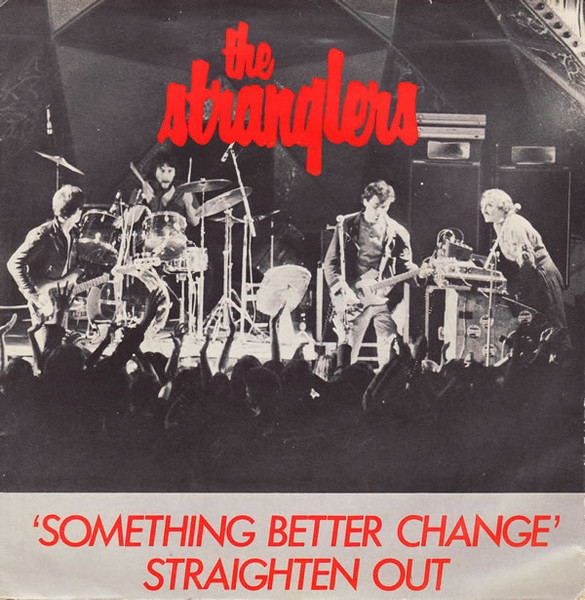
This is possibly the strongest run of rock singles since the Who in the sixties. Loud, sneeringly uncaring – if only to mask how deeply they really care – treble-heavy BEATS with phlegmatic vocals and words (“STICK MY FINGERS RIGHT UP YER NOSE!”), a phenomenal free-form guitar freakout solo by Hugh Cornwell, and the closing organ chords are the same ones you find on “Circus ’68 ‘69” by Charlie Haden’s Liberation Music Orchestra! This has more to do with Ornette Coleman than Chuck Berry, and a typically great production from Martin Rushent. It’s going to squat in the top ten and there’s nothing you can do to get them out, so just put up with it or go and listen to Rick Wakeman.
13 August
THIN LIZZY: Dancing In The Moonlight (It’s Caught Me In It’s [sic] Spotlight)/Bad Reputation (Vertigo 6059 177)
Phil Lynott’s obviously been listening to what’s going on, particularly “Peaches” by the Stranglers, but this is terrific, jazzy hard-rock with a melancholy sax solo and tremendous dynamic control (pauses, drumrolls, over-emphasised guitar solo). Thin Lizzy aren’t prepared to become boring or old, or indeed fart.
THE STEVE GIBBONS BAND: Tulane/Now You Know Me (Polydor 2058 889)

Birmingham pub rockers get a belated hit with a hearty Chuck Berry cover that’s pretty compatible with the New Wave things that are going on. Produced by Kenny Laguna.
CARLY SIMON: Nobody Does It Better/After The Storm (Elektra K 12261)
The first James Bond theme not to have been composed by John Barry since, er, “The James Bond Theme” restores Simon to our charts after a four-year absence with an opulent orchestral arrangement by Richard “The Crunch” Hewson (!) and the clumsiest and most artificial insertion of a film title into any lyric I can think of (this song has NOTHING to do with any “spy who loved me” unless she’s talking about Tony Orlando’s creepy upstairs neighbour in “Knock Three Times”).
20 August
DANNY WILLIAMS: Dancin’ Easy/No More Cane (Ensign ENY 3)
It had to happen – the Martini commercial set to music, crooned by the “Moon River” star from before I was born. Enjoyable enough, but the awkwardness of not being able to sing “Martini” is as pronounced as the New Seekers’ avoidance of “It’s the real thing” and “Coca-Cola” in “I’d Like To Teach The World To Sing.” The B-side doesn’t seem to be about Billy Bunter at Greyfriars School.
RODS: Do Anything You Wanna Do/Schoolgirl Love (Island WIP 6401)

Presumably fed up with not having any hits, Eddie and the Hot Rods have cut their name down and made a shameless bid for the charts with this “Born To Run” rip-off. I’m sorry but if you’re going to be punk rock you don’t stand there like a newly-defrocked chorister crooning “NEITHER NO OPTICIAN!” or, worse, “NO ONE TELLS YOU NOTHING!” like you’re Julian Orchard. Additionally, you chaps are far too old to be singing about “schoolgirl love.” Somebody really should call the police.
THE DOOLEYS: Think I’m Gonna Fall In Love With You/Goodbye Hallelujah Island (GTO GT 95)

Northern chicken-in-a-basket family cabaret act proferring very dated-sounding MoR, like the Tremeloes attempting to do “Rock Your Baby.”
SPACE: Magic Fly/Ballad For Space Lovers (Pye International 7N 25746)

After three hohum singles, how spectacular to hear a truly great one. I know nothing of Space except that they are French, but this bouncingly tragic electronic instrumental dancer – it really does sound like the music in the disco where Kraftwerk’s showroom dummies are dancing, or perhaps it’s “Telstar” as rearranged by the producers of The Golden Shot, but this sounds proudly like a record of the imminent future. Brilliantly arranged and produced, with such an irreducible sadness at its propulsive core. Together with “I Feel Love,” this is the true music of tomorrow, and possibly a number one.
MINK DeVILLE: Spanish Stroll/Gunslinger (Capitol CLX 103)

Not really punk or particularly New Wave – if anything this sounds like the Fonz impersonating Lou Reed – but it’s a really punchy and agreeably daft piece of what I guess you’d call Latin rock, and as with a lot of the best pop records, you get the feeling that Willy deVille is making it up as he goes along.
27 August
DAVID SOUL: Silver Lady/Rider (Private Stock PVT 115)

It’s going to be three big hits in a row for Hutch, this one slightly more uptempo than the previous two but more catchy than either. In the promotional film he wanders alone down a big, mysterious American highway but it doesn’t rain (despite the song’s references to “the Indiana wind and rain”) so it could have been worse.
ELKIE BROOKS: Sunshine After The Rain/Spiritland (A&M AMS 7306)

Superior MoR-pop ballad, written by Ellie Greenwich, sung by Billy J Kramer’s sister with characteristic style, and boring me to death.
THE ADVERTS: Gary Gilmore’s Eyes/Bored Teenagers (Anchor ANC 1043)
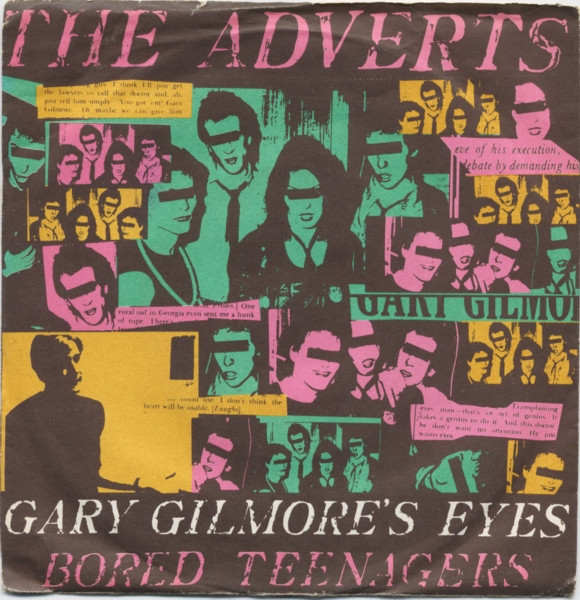
There is no way “One Chord Wonders” would ever have been a hit, but this explosion of a hit does suggest that the commercial tables are turning. Hysterically apocalyptic Gothic garage punk thrasher which suggests there’ll just be more rain after the rain.
JEAN MICHEL JARRE: Oxygene (Part 4)/Oxygene (Part 6)(Polydor 2001 721)
France really seems to be showing the way with electronic music at the moment. If “Magic Fly” is a romantic dance, “Oxygene IV” is a classical ballet, elegant as opposed to elemental, a glide rather than a pronounced beat. In either song the voice is absent, or only present in the listener’s mind. It feels like the world might sound once humans are gone; the reminders of old machines, of what we might have once been capable. Perhaps even a better, more peaceful world. Synthesisers, programming – what waits for us tomorrow, if we can summon up the nerve to face then embrace it.
DONNA SUMMER: Down Deep Inside (Theme From The Deep)/JOHN BARRY: Theme From The Deep (Instrumental) (Casablanca CAN 111)

Last month punk seemed to be the most prominent future, but now it appears more like the cumulation of a development, whereas when you hear “Magic Fly,” “Oxygene IV” or this, there isn’t any real precedent. Never mind “Nobody Does It Better”; this should have been the theme for the new Bond film, with Donna’s characteristically deep breathing and John Barry managing to out-Moroder Giorgio Moroder (no mean feat). This is grand and this is tomorrow.
ELVIS PRESLEY: Way Down/Pledging My Love (RCA Victor PB 0998)

What happened was this. It was three Tuesdays ago and I was in my bedroom listening to the Radio Luxembourg Top 30 show hosted by Bob Stewart. About halfway into the show he urged listeners to stay tuned until eleven when there would be some very important news. The song he was playing at the time was “Something Better Change” by the Stranglers, which in retrospect I found hugely symbolic.
Midway through “Something Better Change” my father ran into the bedroom, asking me to come into the front room to watch News At Ten; it had just been announced that Elvis had died of a heart attack, aged 42. I went in to see Reginald Bosanquet gravely announce Presley’s premature passing. That age. 42 – it sounds so old and it spells doom; I read in last week’s Radio Times about another man who fell grievously ill at the same age.
Well, I was shocked but at the same time I wasn’t shocked at all. Everybody had seemingly seen Elvis’ end coming but it was still a bolt to have it actually happen. The first big rock ‘n’ roll star – now history. In the year of punk. “No Elvis, Beatles or the Rolling Stones in 1977!” roared the Clash four months ago, and I don’t expect they’re feeling much better about this either.
So all people are doing now is buying Elvis records, old and new ones, and listening to them intently enough that they hope with enough intent he’ll come back and haven’t actually have died at all. My classmates don’t get it; they think Elvis was somebody your parents like. My mother liked him more than my father did. But there’s this huge hole in pop now which I’m not sure can ever be refilled, and we shouldn’t be laughing at that absence.
“Way Down” is no melancholy, monumental farewell because it wasn’t planned as such; it was just another routine Elvis record, an uptempo shuffle that was livelier than a lot of what he’d done recently. A good-time boogie, if you must. But it was the “new” Elvis record when he died, so listen to it, touch it, feel it, sense that you haven’t lost him for good. Not even six months at number one can ever hope to bring him back. But you have to remember in order to have any chance of forgetting. The B-side is him singing “Pledging My Love,” a song that was in the charts in 1954 after its original singer, Johnny Ace, accidentally shot himself dead. It now sounds like a requiem for both men, as well as for something vaster, if not necessarily greater.


I was probably one of the last people to review (on the radio) Elvis. I thought "Way Down" was pretty good and would be a big hit. Also, that I heard he was in the process of leaving Col Tom. ...
ReplyDeleteAlso:
Me: "I liked the line about picking each others noses"
Paul Hollingdale: "Yesss, that didn't go unnoticed....."