On 9 July, we flew off for another holiday to New York. On this occasion we stayed there only for three weeks because money was slightly short. We did more or less the same things as we had done twelve months before; apparently Dennis Potter and his wife Margaret were also in town at the same time as us, although we never knowingly saw them, and whatever cab drivers we had, I’m pretty sure Philip Glass – who even at the time of Einstein On The Beach retained his day job driving a taxi – wasn’t one of them. The free jazz scene on the Lower East Side was much the same as before except there was a lot more David Murray and I was still too young to witness any of the other big arty things going on in the city at the time. One did sense, however, that “the scene” as a whole was changing, and probably not into something that my father might have liked. I next visited New York, on my own and semi-orphaned, in the summer of 1982 and can attest that my father would very likely have detested all of what I saw and experienced then.
Notes on Text
I should tell you something about “Slow Down.” In late July 2018, when I was still an inpatient at St George’s Hospital but definitely improving with the prospect of discharge becoming more graspable every day, I listened one Saturday afternoon, via my portable DAB radio headphones, to that week’s Pick Of The Pops, which happened to feature the Top 20 from week ending 30 July 1977. I sat up in my chair, loved most (if not all) of what I heard, and found I couldn’t stop moving when “Slow Down” came on; I was essentially dancing while sitting down. More than one nurse walked by and smiled their approval at me. I knew then that life was returning.
I still haven’t made my mind up about Boney M’s “Still I’m Sad.”
“I Feel Love” predictably got to number one, but afterwards so did the patiently-queuing-up-at-number-two “Angelo” (if only for one week). Happily, the Floaters prevailed over Showaddywaddy in the top two, as was only right and fair. Unlike a certain other overpraised rock musician (or, as I would term him, “chancer”) from West Central Scotland, I actually did buy “I Feel Love” and “Pretty Vacant” at the same visit, but not the 12” of “I Feel Love” because that didn’t yet exist (that happened with Donna Summer’s next hit).
The Velvet Underground albums, as with so many other “important” records, remained out of print until 1979. I didn’t catch up with White Light/White Heat until 1981, and when I first heard “Sister Ray” I, er, flipped.
For such a futuristic sound, the main musician behind the RAH Band was Richard (Anthony) Hewson, arranger of long standing (Beatles, Mary Hopkin, Nick Drake, Jigsaw and those are just for starters). “The Crunch” was composed for a jeans commercial but I don’t ever remember seeing that. The “band” who “performed” the tune on Top Of The Pops were random guys plucked off Putney High Street – Hewson had a recording session booked that evening so couldn’t make the show himself, but hugely resented what he perceived as a mockery.
2 July
JESSE GREEN: Come With Me (Vocal)/Come With Me (Inst.) (EMI 2615)

It’s remarkable how influential “Love’s Theme” has remained three years after it came out. Slow, lushly-harmonised groove with expensive-sounding brass, strings and lead guitar, yet it still sounds like music from a Martini commercial. Green gives it his best vocal shot but this isn’t going to be the next Real Thing (unless James Last is going to arrange for them).
BOB MARLEY & THE WAILERS: Exodus/Exodus (Instrumental Version) (Island IPR 2000)

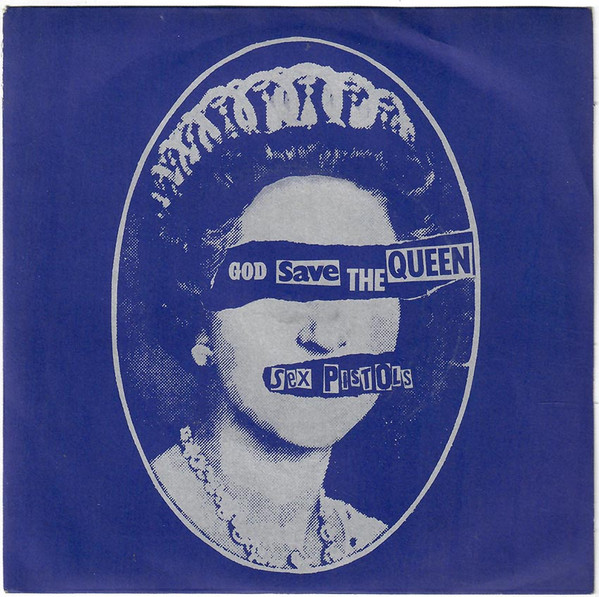
Island jumping on the 12” bandwagon, since the Wailers have not had a hit for nearly two years, but if it’s worth getting such a spectacularly powerful record into the Top 20, then it was worth doing. The album of which this is the title track has been available for a month but the wider grooves of the 12” single benefit the song’s rhythm in particular. Angrily righteous – as though determined not to be outdone by Two Sevens Clash – this is a hypnotic groove of a chant with judicious (if not quite dub) use of echo and deserves to be a really big hit. Whether it will be a really big hit will of course depend on the whims of Radio 1 daytime producers, most of whom seemingly came up in the days of Glenn Miller, but this is as furious and great a pop single as “God Save The Queen.”
JOHN MILES: Slow Down/Manhattan Skyline (Decca F 13709)

What a spectacular comeback, or re-emergence from a painted-in corner, for the “Music” man, who has enthusiastically gone full disco. Architecturally brilliant – the patiently descending bass playing at half the tempo of the “CAN’T SLOW DOWN” backing singers in the second and subsequent choruses, the Woolworths synthesiser solo and even a talk-box guitar solo, the strings swooping like vultures out dancing for the night, and Miles’ alternately screeching and cooing vocal – this is such a fantastic pop record, like Amen Corner having just been woken up. Should go top ten without any worries.
BONEY M: Ma Baker/Still I’m Sad (Atlantic/Hansa K 10965)

In March 1973 we watched the Jean-Luc Godard science fiction film Alphaville on BBC2. It was pretty intense stuff but I was principally struck by the thought that this was one of many European attempts to emulate American culture. This thought has been revived by the new Boney M single, which tells a Bonnie And Clyde-style thirties gangster tale over an ice rink disco soundtrack. I constantly think of ice whenever I hear Boney M, as the elements of disco are all there, but at one remove. The beat therefore tends to be static rather than propulsive; there is the feeling of elements not quite there, and others (including emotion) missing – so it’s an unlikely counterpart to the Bowie of Berlin recording the first side of Low. “Ma Baker” is an imperfect replica of a disco record, as though scrupulously but unfeelingly copied by Martians. Disco for people who don’t particularly want to dance, perhaps? It may well get to number one, which might tell you something very important about the Britain of 1977. The Yardbirds cover on the B-side is either absurdly inspired or unspeakable; I haven’t yet made up my mind which.
(N.B.: The remainder of entries for this month were written in my bedroom on the evening of Monday 1 August, following our return from New York and after I’d had the opportunity to catch up with all of these records. By this time I’d long since given up on the log books and was typing them all out [the entries, not the log books] – M.C.)
9 July
RITA COOLIDGE: We’re All Alone/Who’s To Bless And Who’s To Blame (A&M AMS 7295)

The Boz Scaggs ballad might prove one of the year’s most popular songs, and Coolidge’s careful rendition (with a rather more pointed B-side, written by her husband Kris Kristofferson) looks set to give her a very big hit, nearly seven years after Joe Cocker immortalised her on “Delta Lady.” You never see Joe Cocker in the charts these days but maybe he doesn’t need the charts any more.
SUPERTRAMP: Give A Little Bit/Downstream (A&M AMS 7293)
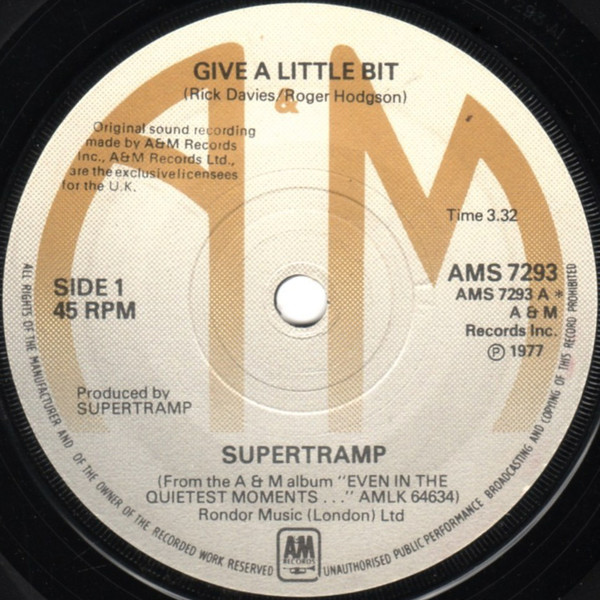
The A&M promotional strike force are clearly doing their job at the moment, or perhaps they’ve been told to after the Sex Pistols debacle. Decent half-ballad AoR marred only by Roger Hodgson’s uniquely irritating vocals. Their first hit in over two years.
COMMODORES: Easy/Machine Gun/I Feel Sanctified (Motown TMG 1073)
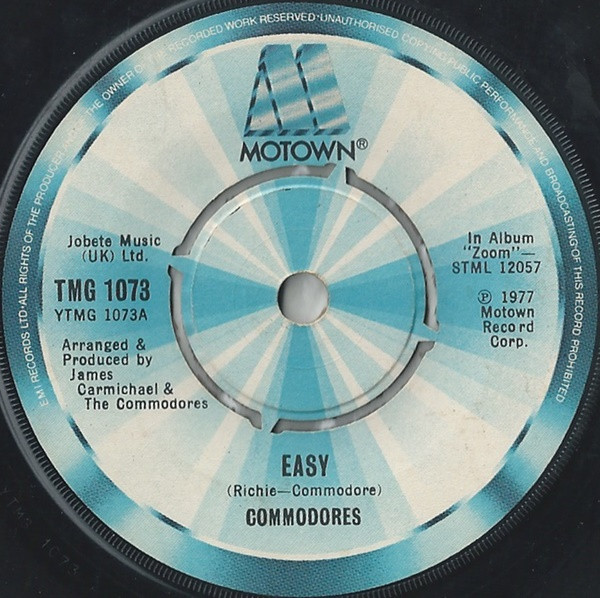
Haven’t seen much of the Commodores since 1974, so little that “Machine Gun” has been tacked onto the B-side of this maxi-single – remember those? – to remind people who they are. This is very different from “Machine Gun”; a simultaneously lush and raw ballad where singer/songwriter/pianist Lionel Richie basically states the case as to why the rest of the world should leave him the hell alone. Very nicely done, with an agreeably snappy and irked-sounding guitar solo (which Richie cues in with his strangely ecstatic “Oooooh!”), and heading for the top ten or I live in Bellshill.
ANDY GIBB: I Just Wanna Be Your Everything/In The End (RSO 2090 237)

The younger brother of the Bee Gees, who is already being screamed at in the U.S.A., with bouncily flaccid MoR teenpop penned by biggest brother Barry. Sounds made to measure so may not become too big a hit here.
BROTHERHOOD OF MAN: Angelo/All Night (Pye 7N 45699)

In their continuing quest to become the British Abba, complete with “Dancing Queen” piano block chords in the chorus, the Motherhood of Bran flounder quite badly with this very dated-sounding slice of international holidaymaking love-and-death melodrama that is so poorly constructed that the song runs out of song halfway through and the group end up having to juggle its few elements and repeat them over and over in slightly different formations. Not that any of that is going to be of any concern to distressed housewives, who – I warn you right now – are likely to make this a very big hit.
TAVARES: One Step Away/Out Of The Picture (Capitol CL 15930)

Poor old Tavares; they’re not having a great time at the moment. On their last one, somebody stole their baby, and on this one they’ve been stood up at the altar. They’re also losing their good humour. Maybe they should take up macramé.
DONNA SUMMER: I Feel Love/Can’t We Just Sit Down (And Talk It Over) (GTO GT 100)

Where do I even begin with this one?
I would suggest beginning in Listen Records on the afternoon of Saturday 2 July, when I bought this single along with the new single by the Sex Pistols, which no one had expected so quickly after “God Save The Queen” and had come into the shop that very afternoon; I got my copy out of the newly-opened box.
Both singles are, of course, great, but the Donna Summer one is the one which I think paves a firmer road towards the future. Hers might even be the most important pop single since “Rock Around The Clock” or at least “Heartbreak Hotel” in that it changes everything surrounding it, i.e. the rest of pop music. It is as long as “I’m Not In Love” and “Bohemian Rhapsody” but so much more determined and assured of its own greatness (you get the feeling that Eric Stewart and Freddie Mercury keep having to apologise for theirs)…
…and also its own newness. “I Feel Love” doesn’t really sound like any other pop record that preceded it. It sounds a lot like electronic music that normally doesn’t get anywhere near the charts. I suppose I could propose that it sounds like a million galaxies happily swirling past each other in the universe and getting on just fine, but some might find that juvenile and pretentious. “Telstar” by the Tornados, perhaps?
This is Giorgio Moroder’s record as much as it is Donna Summer’s – hers is the juice of vitality that feeds an otherwise robotic body. Yet again I think of Bowie, gradually erasing himself from his own picture throughout Low. But on what other pop record is the lead vocal faded out halfway through, leaving only the backing track, as though riding off and vanishing on the tail of a passing asteroid? This is radical and nearly not human. Then she comes back for the big climax, then fades away for the final time like a retreating comet, with only the pulse – the beat of something, and not necessarily life – remaining, possibly forever.
I suspect the song has elements of 1967 psychedelia about it – the spiritual incantations, the flower-power wind-blowing I’m-freeness – but “I Feel Love” comes across as the spirit of San Francisco as transplanted into a spaceship. It really has no precedent in pop, yet encloses within its wiry fibres all of pop’s meaningful future. It is obviously going to go straight to number one – do not pass Go, do not collect £400 etc. – and in that sense will prove the first chart-topping single since “Rock Around The Clock” by some other comets to alter the fabric of what we discern as constituting pop music. It is that important.
16 July
DAVE EDMUNDS: I Knew The Bride/Back To Schooldays (Swan Song SSK 19411)

Dave Edmunds only visits the charts every few years or so, but his is always a welcome presence – sprightly rock ‘n’ roll with Rockpile (including, on bass, Nick Lowe) which, despite not being in or of itself punk, is nevertheless fully compatible with it.
FLEETWOOD MAC: Dreams/Songbird (Warner Bros K 16969)

The last time Fleetwood Mac were in our charts was in 1973, when a reissue of “Albatross” surprisingly made it to number two (those times were strange). “Dreams” is therefore the band’s first “new” hit single since “The Green Manalishi” seven years ago – and is the work of an almost entirely different band. Both Fleetwood and Mac remain present, as you might expect, but the voice of Stevie Nicks, whose song “Dreams” is, is a very different proposition from the seemingly lost voice of Peter Green (or perhaps is an unwanted, angular mirror reflection).
Rumours has been out for about five months and I haven’t felt the need to buy it, since Radio Clyde plays tracks from it most of the time, it would seem. It doesn't seem like a very happy record, though – there are tension, resentment, largely unspoken rage and some prods at hope – and I am aware from reading Melody Maker that there are reasons why these things are present.
“Dreams”’ sense of luxuriously acidic resentment imbues the song’s otherwise patient, yet deep, pulse. The song muses over things lost, chances missed or rejected. Lindsey Buckingham’s weeping guitar requires no supporting words from him, other than backing vocals as if on a separate continent. This is adult-oriented rock that possibly only adults are permitted to understand. “You will KNOW,” Nicks repeatedly insists as the song concludes on the saddest closing chord I have ever heard in any pop music. On the B-side, Christine McVie, at her piano, sings a song of love so uncomplicated and direct that it breaks your heart – why can’t things be like this? What did we do wrong, with the exception of everything?
SEX PISTOLS: Pretty Vacant/No Fun (Virgin VS 184)
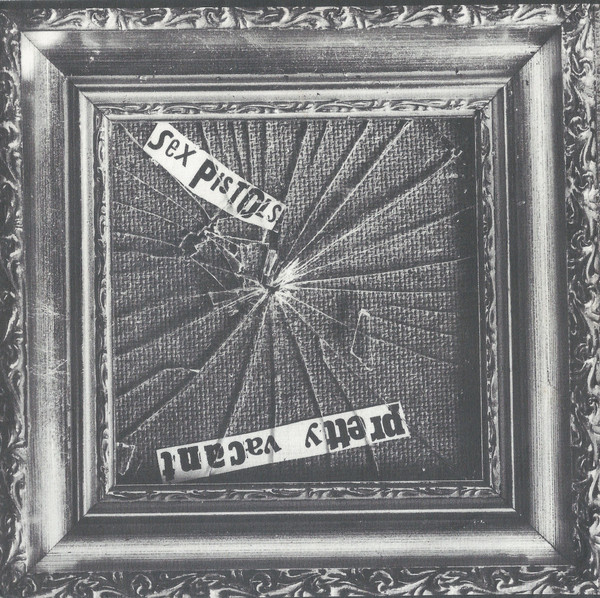
“The boys keep it clean,” the papers keep saying, but have they heard how Johnny Rotten pronounces the word “vacant” throughout this song, especially at its end? The Pistols are as lost in (their own) space as thoroughly as Donna Summer but seem to revel in their sense of enraged entitlement, just as they celebrate the fact that they are entitled to nothing at all. What a terrific rock ‘n’ roll record – the band’s second such in the space of one month – which can’t NOT be played on the radio and which will therefore open up their art, or anti-art (which usually turns out to be the purest art), to the wider world. This is what the Sex Pistols sound like. They are not the Brotherhood of Man. This is why they must exist. “We don’t care”? I think they care more deeply about everything than you, me or practically everybody else, the sneaky blighters. On the B-side they happily deconstruct Iggy Pop and the Stooges, just to remind you of what went on when Vanity Fare observed that evening was a time of day, but the Stooges found everything to say. Pop as it stands today, in 1977, not 1966 or 1955. Get used to it or be seeing you.
23 July
THE JAM: All Around The World/Carnaby Street (Polydor 2058 903)
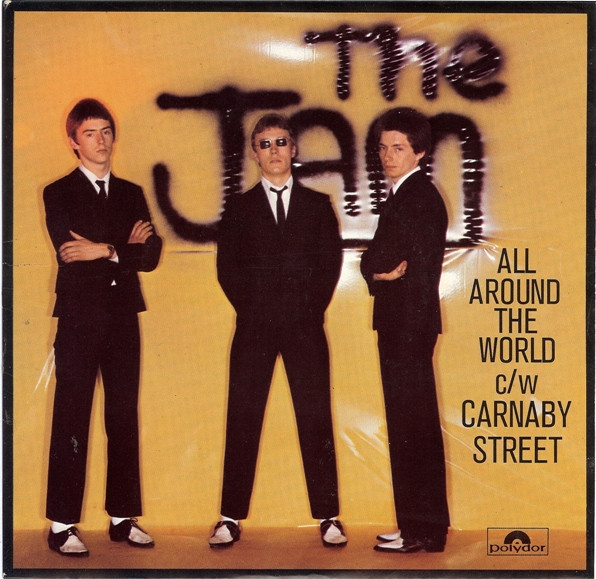
The next time your big brother or elder cousin tries to tell you that punk is nothing new, that the Who were doing what the Pistols do when he was your age – the obvious question there being, well why aren’t the Who doing that now? – you might want to play them the second single by The Jam, because this is exactly why the Who made such an impact a dozen years ago. If you know “My Generation” etc. you might choose to shrug your shoulders and wait for the next Roger Daltrey solo album, but if you know nothing of the sixties except what residual elements of it older people keep ramming down your throat then this will be wholly new and exciting to you. “All over the country, WE WANT A NEW DIRECTION!” with drums rattling, guitars scraping and the band howling their urgent newness directly into your heart. This energy is atomic, the record’s overall impact explosive, and you come out of it absolutely willing to knock every bland suburban compromise down and construct a new, better and more vivid world. The Jam have the potential to be every bit as big as the Who – but it will be for their generation, and that generation only. That is the point of pop.
SMOKIE: It’s Your Life/Now You Think You Know (RAK 260)

The world may be burning but we can depend upon good old reliable, tedious Smokie to plod on like conscripted sharecroppers. Actually this is a little bit more ambitious than their rather dull norm, if constipated stop/start cod-reggae with a different, half-speed middle-eight that sounds like Chinn and Chapman had just heard the Beatles’ “Baby You’re A Rich Man,” complete with a melodramatic long pause before the cod-reggae recommences, counts as ambition. It’s probably their best single and will restore them to the top ten, but how low is the bar here?
JONATHAN RICHMAN: Roadrunner (Once)/THE MODERN LOVERS: Roadrunner (Twice) (Beserkley Records BZZ 1)
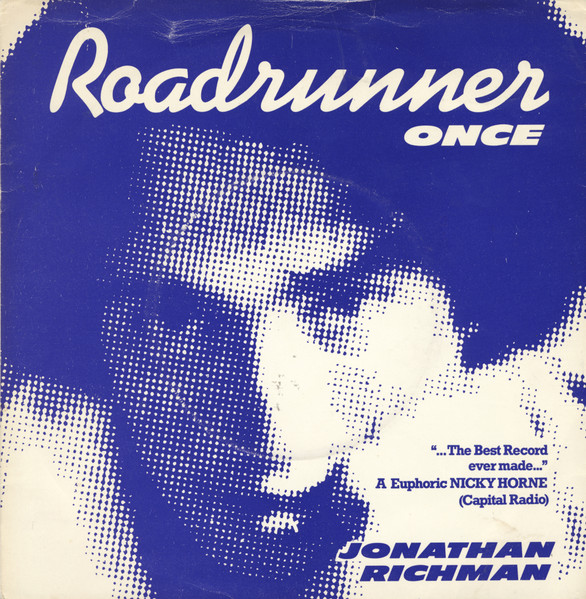
“The best record ever made,” said “Euphoric” Capital Radio DJ Nicky Horne of this, apparently; I wouldn’t know anything about that since up here we get Radio Clyde and I can’t see Richard “Dr Dick” Park or “Tiger Tim” Stevens getting similarly inspired (some people up here still think Kenny are the way forward). And I don’t know what constitutes “the best record ever made” because all I know are my favourite records – although in everybody’s minds, the two qualities are interchangeable.
What is indisputable, however, apart from in the dessicated minds of stupid old people, is that “Roadrunner” by Jonathan Richman is one of the most brilliant and ridiculous pop records I’ve ever heard in my life – and I want to hear it all the time. In its jovially knowing manner it is as anti-The Pop Single as “I Feel Love” or “God Save The Queen” and yet few pop singles are so unapologetically celebratory.
He’s in a car, driving down the greatest-sounding highway in the world – it isn’t the M74, let’s put it that way – and sometimes he’s walking past the “Stop ‘N’ Shop” for no reason other than he enjoys doing that, even though he prefers driving because he’s “got the radio on – RADIO ON!” “Roadrunner” is a celebration of rock ‘n’ roll’s elemental power, one of the best since the days of Chuck Berry and the Beach Boys.
Structurally the more recent version – the one that’s getting played on the radio – is beautifully put together; what a superb band performance, full of rhetorical drop-outs – at times it’s just Richman’s voice, the rhythm section and a gently-chugging, near-inaudible rhythm guitar, inhabiting the same realms of outer space as Donna Summer (they are like satellites circling each other) before everybody charges back in, all working together to build up a great, cathartic climax over which Richman’s now-ecstatic voice threatens to break all boundaries of rhythm, scansion and logic. Just as everyone is about to go over the edge, however, Richman directs his band to step back, quieten down and drive back home – but not before offering a thrilling, hammering chordal crescendo to finish off this most imperfectly perfect of all pop records. Never mind “the sixties”; it is a liberating joy to be young and alive at the time of this great new music as it is happening.
(The B-side is the Modern Lovers’ original and somewhat milder 1971 version of the same song, produced by John Cale; comparisons have been made to “Sister Ray” but since the Velvet Underground’s albums are currently out of print I don’t know anything about that.)
BARRY BIGGS: Three Ring Circus/No One Knows You When You’re Down (Dynamic Sounds DYN 128)
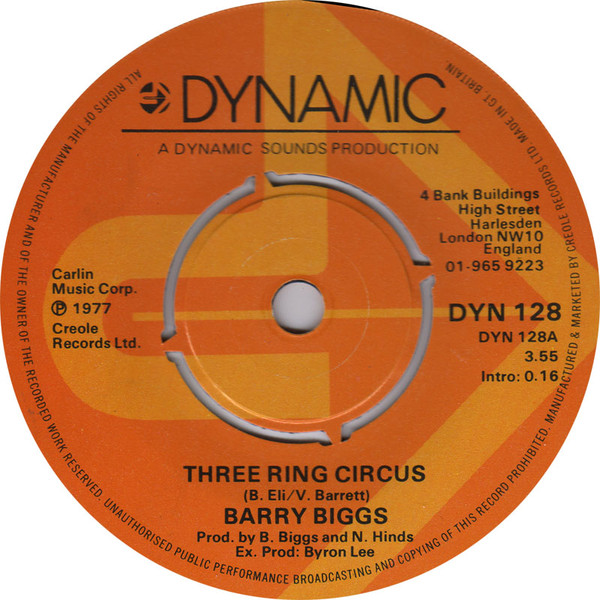
Not meddling with the formula, the reggae singer revisits the Blue Magic/Thom Bell back catalogue for the predicted, if unlikely to be as successful, follow-up to “Sideshow.”
THE RAH BAND: The Crunch (Part 1)/The Crunch (Part 2) (Good Earth GD 7)

I mean, really; isn’t this one of the best of times for pop music since the sixties? Great and unexpected records coming at one from all directions. This is a gnarled, electronic instrumental stomper – “Pepper Box” as interpreted by the Glitter Band – with stoned-sounding brass, thrilling, shrieking stops-and-starts, backwards Duane Eddy guitar slides and a mysterious monster of a voice in the instrumental pauses. “The Crunch” teeters on the brink of chaos but celebrates its closeness, and doesn’t give a damn whether you like it or not. I think it’s fantastic.
30 July
TELEVISION: Prove It/Venus (Elektra K 12262)

All people who care about where music is going should already know Marquee Moon, but this is the second track from it – again assisted by a 12” edition – to help make our chart a truly fun thirty again. This is mind-bogglingly brilliant, Tom Verlaine’s pleas and accusations so insistent that you momentarily fear for the integrity of your throat, and Billy Ficca’s is the most uncanny drumming I’ve perhaps heard on any record since Tony Williams on Miles Davis’ Nefertiti. This is JAZZ so no wonder my father likes it. The song takes apart the framework of what we might recognise and comprehend as “rock music” and reassembles its components in a new and startlingly more attractive manner. These charts from this month are some of the best ever.
CANDI STATON: Nights On Broadway/You Are (Warner Bros K 16972)
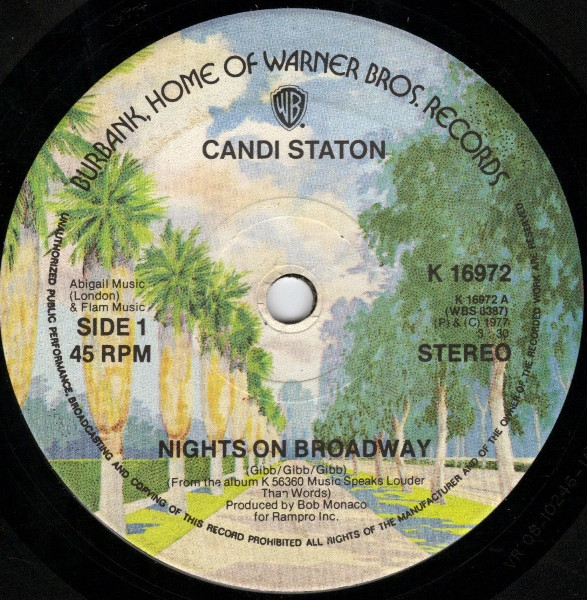
Hauling herself off the one-hit-wonder register, the “Young Hearts Run Free” singer delivers what is a gutsy improvement on the Bee Gees’ (typically lyrically strange) original.
THE FLOATERS: Float On/Everything Happens For A Reason (ABC 4187)

Extraordinary soul epic in which ethereal harmonies alter with individual group members talking about their star signs. It is one breath away from being naff and absurd but is remarkably persistent in its avoidance of the obvious, particularly in its astonishing abstract, free-form coda. A potential number one.
SHOWADDYWADDY: You Got What It Takes/Showboat (Arista ARISTA 126)

Well, much rather the Floaters at the top than yet another boring Showaddywaddy cover, this one being of a not very good 1960 hit by Marv “I’ll Pick A Rose” Johnson. A reminder that while all of this thrilling, new music is being made, the majority of the British people will instead opt for this stale cheese-grater of an imagined past that they probably hated when it was happening. Lacking the courage to risk tomorrow, they suck their thumbs against the security blanket of yesteryear. What is everybody so afraid of?